
Who
is
a Young

Professional?
Achievements in education
Certificates of continuing education, academic contests, etc.
Scientific activity
Publications, patents and IP, etc.
Experience in knowledge transfer
Teaching experience, participation in conferences, hosting of classes and lab tours, etc
Best young professional from ITMO
Who can participate:
- ITMO staff members
- ITMO PhD students
Evaluation criteria:
- Quality of the participant’s report as delivered during a section or scientific session
- Personal portfolio
- Participant’s contribution to research projects
Best popular-science talk by a young professional
Who can participate:
- Students of Bachelor’s and Specialist’s programs in years 3-5
- Students of Master’s programs
- PhD students / adjunct professors / medical residents
Evaluation criteria:
- Quality of the participant’s report as delivered during a section or scientific session
- Relevance of the topic, comprehensiveness of review of existing solutions, and analysis of their drawbacks
- Participant’s contribution to the proposed solution
CONFERENCE SECTIONS
As part of the conference, Russian and Chinese researchers and engineers will exchange experience in three key areas:
• laser and photonic technologies;
• artificial intelligence and robotics;
• biotechnology.
The aim of the event is to identify pathways for cooperation and to discuss the challenges and opportunities of technology transfer.

Samat Smoilov
Chair
Candidate of Legal Sciences, PhD, Vice Rector for Science and Commercialization, Turan-Astana University (Kazakhstan)

Anatoliy Konev
Chair
Master of Technical Sciences, Vice Rector for Digitalization and AI, Turan-Astana University (Kazakhstan)

Ksenia Butylkina
Chair
Candidate of Engineering Sciences, Head of the Conferences and Exhibitions Department, ITMO University

Pr. Hércules Antônio do Prado
Chair
Doctor of Computer Science, Professor, Catholic University of Brasilia (Brazil)

MSc. Nicolas Ortiz
Chair
Professor, Faculty of Marketing, University of Lima (Peru)
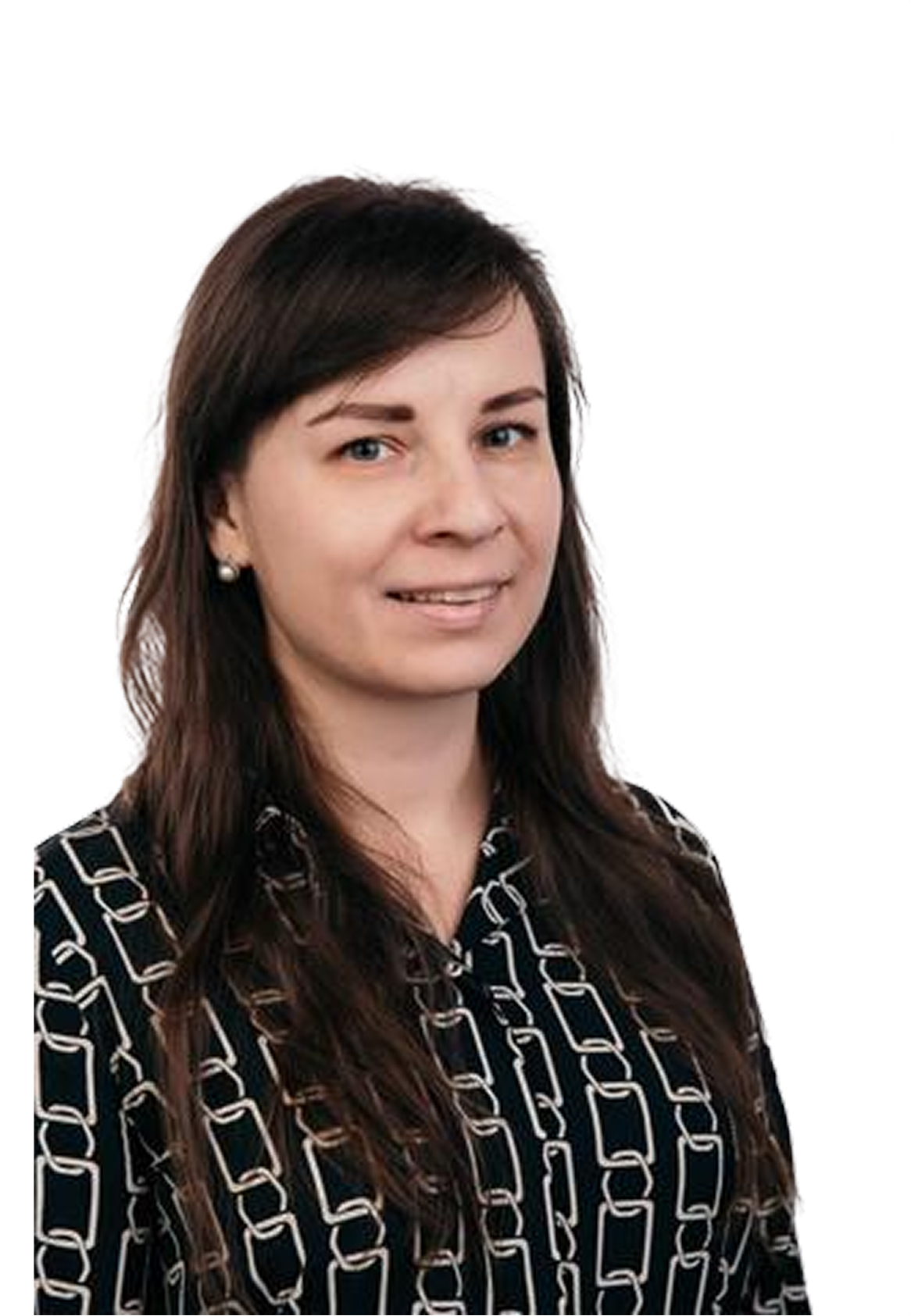
Lyubov Gamzinova
Contact person
Engineer at the Educational Center for Student Science, Conferences, and Exhibitions, ITMO University
The section is devoted to exploring the corporation as a socio-technological institution capable of shaping meanings, norms, and value systems that influence both individuals and the development of technologies.
The focus is on the mechanisms of meaning production and transmission, the formation of the image of the human of the future, as well as the theoretical, ethical, and historical foundations that allow us to interpret the corporation as a cultural agent and a bearer of social responsibility.
We invite submissions addressing the following topics:
• the role of corporations in shaping cultural and value frameworks;
• the challenges of corporate social and cultural responsibility;
• artistic interpretations of the “human of the future” within corporate strategies and practices;
• historical transformations of the corporation as a social institution;
• interactions between corporations, technology, and society;
• communication projects and research within corporate environments;
• the integration of corporate logics with those of other institutions, particularly universities;
• various forms of collaboration in business and creative activities, including comparisons between corporations, self-organized groups, and cooperatives;
and more.

Polina Kolozaridi
Chair
PhD, Director of the International Center for Digital Humanities Research, ITMO University

The section will explore best practices for the creation, identification, protection, and transfer of intellectual property results. Its scope covers a wide range of intellectual property assets, as well as key issues related to innovation commercialization, technology transfer, the achievement of technological sovereignty, and patent analytics serving the needs of small, medium, and large businesses, as well as government.
Partner: The World Intellectual Property Organization (WIPO) serves the interests of innovators and creators worldwide by enabling the smooth transition of their ideas to the market and contributing to the improvement of quality of life across the globe.

Andrey Nikolaev
Chair
Candidate of Economic Sciences, Director of the Center for Intellectual Property Institute Development, ITMO University

Anton Antipov
Contact person
Candidate of Philological Sciences, Associate Professor, Intellectual Property Institute Development Center, ITMO University
The section “Genetic Engineering, Nanobiotechnology, and Biomedicine” is intended for researchers developing new methods for the treatment and diagnosis of diseases using advanced approaches in molecular biology, biotechnology, microbiology, biochemistry, and genetics.
This section is for you if you:
• conduct applied or fundamental research in the medical field;
• develop biocompatible materials, including nanomaterials, or cell-based products for tissue and organ regeneration;
• create lab-on-a-chip systems, biosensors, PCR systems, and other biomedical technologies or diagnostic devices;
• work in the fields of genome editing, gene therapy, the development of genetically modified organisms, or cell lines for biomedical applications;
• develop new pharmaceuticals, targeted drug delivery systems, or theranostic solutions.
• We are pleased to invite senior undergraduate students, PhD candidates, early-career researchers, and representatives of профильных companies to participate.

Artur Prilepsky
Chair
Candidate of Biological Sciences, Head of the Bioactive Materials Laboratory, ITMO University

Elena Koshel
Co-chair
Candidate of Biological Sciences, Director of the Center for Molecular and Biological Technologies, ITMO University

Daria Gorbenko
Co-chair
Candidate of Biological Sciences, Educational Program Manager, BIOCAD

Anastasia Bulkina
Contact person
Researcher at the Bioactive Materials Laboratory, ITMO University
The section is dedicated to research projects at various stages of development that employ an interdisciplinary approach in the fields of chemistry and biotechnology. The presented projects may combine experimental research methods with computational modeling techniques, as well as information technology tools. Bachelor’s, Master’s, and PhD students engaged in both fundamental and applied research projects are invited to participate.
The Infochemistry Scientific and Educational Center at ITMO University implements Bachelor’s and Master’s degree programs, actively involving students in a wide range of research projects that utilize information technology tools across diverse fields, including fundamental science, food technology, agriculture, and petroleum refining.
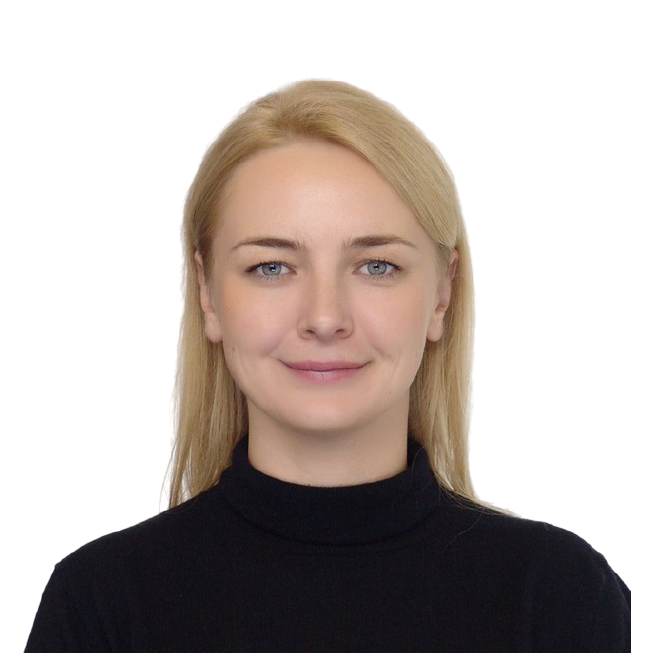
Ekaterina Skorb
Chair
Doctor of Chemical Sciences, Director of the Megafaculty of Life Sciences, ITMO University

Sergey Semenov
Co-chair
PhD, Professor, Weizmann Institute

Anastasia Piven
Contact person
Deputy Director of the Engineering Development Center, ITMO University
The future of science lies in interdisciplinarity. This section will demonstrate how natural sciences, engineering, and agricultural sciences come together to address global challenges and create the technologies of tomorrow.
From biotechnologies transforming agriculture to laser systems improving diagnostics and space maneuvers expanding the boundaries of knowledge, we bring together research where the synthesis of disciplines leads to breakthrough results. Different fields of knowledge do not merely coexist here—they interact, complement one another, and generate innovations that would be impossible within the limits of a single discipline.
Topics of the presentations include:
- real-world cases where combining expertise produced a synergistic effect—for example, how space navigation methods help optimize agricultural land use, or how biotechnology inspires the development of new optical materials;
- success stories tracing the path from laboratory concept to practical implementation: from test tube to field, from blueprint to orbit;
- emerging tools and technologies at the intersection of disciplines, such as machine learning algorithms for crop yield prediction and laser systems for ecosystem research;
- examples of how fundamental discoveries in one field can lead to applied solutions in entirely different domains.
Ksenia Butylkina
Chair
Candidate of Engineering Sciences, Head of the Conferences and Exhibitions Department, ITMO University

Anton Potsulin
Co-chair
Candidate of Economic Sciences, Senior Lecturer at FTMI, ITMO University

Yevgeny Stepanov
Co-chair
Director of Testing at a major fintech company under NDA
Lyubov Gamzinova
Co-chair
Engineer at the Educational Center for Student Science, Conferences, and Exhibitions, ITMO University
The section “Young Medicine: Technologies, Intelligence, Transformation” will bring together early-career researchers working at the intersection of medicine, artificial intelligence, bioinformatics, biophysics, and engineering technologies. We welcome ideas where medicine interacts with optics, data science, digital platforms, and innovative approaches to diagnosis and treatment.
This section is for you if you:
-develop or apply intelligent systems (AI, machine learning, bioinformatics) in medical practice or research;
-explore the potential of optical and biophysical methods in medical diagnostics, imaging, and therapy;
-create technologies and approaches for personalized medicine, digital healthcare, and biomedical engineering.
We invite students, Bachelor’s and Master’s students, medical residents, PhD candidates, and young scientists who aim to transform medicine through science and technology.


Yury Strelchenko
Chair
Associate Professor, Doctor of Medical Sciences, Professor at Donetsk State Medical University

Ekaterina Akulicheva
Co-chair
Chief Anesthesiologist-Resuscitator in Obstetrics and Gynecology, Zabaykalsky Regional Clinical Hospital

Elena Alekseeva
Co-chair
Head of the Student Design Department, Donetsk National Technical University
Monuments and streets serve as keepers of history, revealing much about a city’s origins and development. The coastal cities of the Russian Far East were often founded by explorers and sailors—sometimes even a случайное судно, entering a harbor, could change the course of history.
This section explores how the memory of pioneers is preserved, what street names and monuments can tell tourists, and how urbanonyms can be used as a unique resource for designing original guided tours. We invite those ready to embark on a journey through the “maritime” streets of the Far East and to follow in the footsteps of explorers such as Vitus Bering and Ivan Kruzenshtern.


Alina Kirillova
Candidate of Historical Sciences, Associate Professor, Department of History and Philosophy, Kamchatka State University
Elizaveta Sibirtseva
Candidate of Philological Sciences, Associate Professor, Department of Economics, Management and Tourism, Kamchatka State University
We invite all young professionals to showcase their work in the field of computer vision. We welcome both students and industry practitioners connected to this domain to share their experience, present interesting results, and discuss future plans.
Our section is organized in partnership with Special Technology Center (STC LLC) and United Metallurgical Company (OMK JSC). A competition for the best presentations is planned, with special nominations and awards provided by our partners.
Maxim Volynsky
Chair
Candidate of Engineering Sciences, Associate Professor, Director of the Computer Vision Laboratory, ITMO University
The section focuses on contemporary interdisciplinary research in the field of technological management and innovation studies. We invite researchers who explore society, technology, innovation, and economics in the context of today’s global challenges, and who can present results of applied empirical or theoretical studies, as well as address their methodological aspects.
Partners:
Perm Branch of the Institute of Economics, Ural Branch of the Russian Academy of Sciences
Research areas include:
- enterprise and industry management under competitive conditions;
- development of regional social capital;
- studies of the agro-industrial complex;
- socio-economic development of rural areas.
Additional focus areas:
- development of methods for optimizing strategic and operational management of industrial business processes.
Research outcomes are published in leading peer-reviewed journals, with selected results recognized at international academic events.
RANEPA - Faculty of Management and Innovation
The faculty trains engineering managers with a strong background in economics.
The program includes:
- international management;
- marketing;
- project management.
Program partners include:
- Agency for Strategic Initiatives (ASI);
- Ministry of Industry and Trade of the Russian Federation;
- Russian Union of Industrialists and Entrepreneurs;
- Chamber of Commerce and Industry of the Russian Federation.
The faculty also runs a proprietary business simulator, “Corporate Management,” where students develop managerial skills in real time.
Graduate School of Management SPbU - Center for Market Efficiency and Applied Finance Research
The center specializes in financial research, including:
- digitalization;
- ESG transformation;
- market efficiency.
Its key activities include:
- world-class academic and applied research;
- consulting and educational programs, including courses on AI and modern econometrics;
- development of research potential through work with PhD students and early-career researchers.

Elena Shakina
Chair
PhD, Deputy Dean of the Faculty of Technological Management and Innovation, ITMO University

Alexander Volkov
Co-chair
Senior Lecturer at the Faculty of Technological Management and Innovation, ITMO University

Andrey Starodubtsev
Co-chair
Candidate of Political Sciences, Deputy Dean of the Faculty of Technological Management and Innovation, ITMO University

Ksenia Klimshina
Contact person
Manager at the Faculty of Technological Management and Innovation, ITMO University
This section invites researchers to explore contemporary approaches to studying consumer behavior, customer experience, and decision-making processes in both digital and offline environments. The section focuses on understanding how individuals perceive products, services, brands, technologies, and institutions, and how these perceptions influence attitudes, satisfaction, trust, loyalty, engagement, and behavioral intentions.
Researchers are encouraged to submit studies employing a wide range of methodological approaches, including surveys, experiments, interviews, observational studies, and computational methods based on digital traces and user-generated data. Topics of interest include consumer behavior, customer experience, technology acceptance, electronic word-of-mouth (eWOM), online reviews, social media interactions, service quality, digital engagement, behavioral analytics, and the societal implications of digital transformation.
The section particularly welcomes interdisciplinary research combining traditional social science methods with modern analytical techniques such as text mining, social network analysis, machine learning, and digital behavior analysis. Contributions may focus on diverse contexts including retail, hospitality, tourism, mobility, culture, education, healthcare, public services, and digital platforms.
Submissions may include empirical studies, theoretical contributions, methodological innovations, and applied business or policy cases that advance our understanding of human behavior, experience, and interaction in contemporary socio-economic and technological environments.
The section aims to create a platform for discussing how data, digital technologies, and behavioral research can help scholars, businesses, and policymakers better understand and respond to the needs, experiences, and decisions of consumers, users, and citizens.

Ivan Burkov
Chair
Senior Lecturer, Faculty of Technological Management and Innovation, ITMO University

Polina Shalygina
Co-chair
Lecturer, Faculty of Technological Management and Innovation, ITMO University
This section focuses on the growing role of data, analytics, and digital technologies in supporting managerial, financial, and strategic decision-making across organizations and industries. As organizations increasingly operate in data-rich environments, the ability to transform data into actionable insights has become a critical factor for competitiveness, innovation, and sustainable development.
Researchers are encouraged to submit studies examining how data-driven approaches influence decision-making in business, finance, public administration, product management, marketing, operations, innovation management, and related fields. Topics of interest include business analytics, financial analytics, evidence-based management, predictive modeling, artificial intelligence for decision support, data visualization, digital dashboards, performance measurement systems, risk assessment, customer and market analytics, and data-informed strategic planning.
The section welcomes both methodological and applied contributions. Particular attention will be given to studies demonstrating how organizations use data to improve operational efficiency, optimize products and services, evaluate investments, manage uncertainty, understand stakeholders, and support strategic and financial decisions. Research addressing the limitations and challenges of data-driven management, including data quality, algorithmic bias, organizational adoption of analytical tools, and ethical considerations, is also encouraged.
Submissions may include empirical studies, applied business cases, methodological innovations, interdisciplinary research, and practical solutions that bridge the fields of data science, finance, management, and decision-making. Contributions employing contemporary analytical techniques such as machine learning, business intelligence, optimization methods, simulation modeling, network analysis, and other computational approaches are particularly welcome.
The section aims to facilitate discussion on how organizations can effectively leverage data and analytics to make better decisions in increasingly complex and uncertain business environments.

Aleksei Gorgadze
Chair
Head of the Bachelor’s Program "Business Informatics and Data-Driven Management", Associate Professor, Faculty of Technological Management and Innovation, ITMO University

Kristina Kanunnikova
Co-chair
Lecturer, Faculty of Technological Management and Innovation, ITMO University
The section “Chemistry for Energy Technologies” is a space where the energy systems of the future are shaped. It brings together early-career researchers working at the intersection of chemistry, materials science, and engineering—from renewable energy to solutions for the oil and gas industry.
Today, chemistry acts as a key driver of energy transformation: it determines process efficiency, energy storage capabilities, and the environmental sustainability of technologies. The section focuses on the development of functional materials, the creation of new chemical and technological solutions, improving the efficiency of energy systems, and reducing their environmental impact.
Special attention is given to complex industrial environments, including the treatment of highly mineralized solutions and the extraction of critical elements such as lithium.
Key topics include:
— catalysts, sorbents, and functional materials;
— processing and purification technologies;
— membrane, electrochemical, and adsorption processes;
— sustainable solutions for energy.
This section serves as a platform for exchanging ideas, discussing industry challenges, and presenting innovations that will define the technologies of the future.

Pavel Krivoshapkin
Doctor of Chemical Sciences, Professor at the Advanced Engineering School, ITMO University

Nikita Morozov
PhD in Chemical Sciences, Senior Researcher at the Laboratory of Applied Materials for Energy, ITMO University

Sergey Leonchuk
Assistant at the Advanced Engineering School, ITMO University

Maria Moshkova
Junior Researcher at the Laboratory of Applied Materials for Energy, ITMO University
The section focuses on the transformation of language practices, communication, and education in the context of the rapid development of artificial intelligence and digital technologies.
Special attention is given to the changes taking place in linguistics, translation studies, media communication, and language pedagogy under the influence of generative AI, text-processing algorithms, and emerging digital environments. The section particularly explores the interaction between humans and neural networks in the processes of language production, interpretation, and learning.
The discussion will address the following issues:
— the impact of generative AI on communication, academic writing, and language learning practices;
— new forms of text production: from prompt-based communication to AI-assisted writing;
— the changing role of teachers, translators, and authors in the digital age;
— digital literacy and the development of critical approaches to AI-generated content;
— ethical, cognitive, and epistemological aspects of human interaction with language models;
— language and identity in algorithm-driven communication environments;
— new approaches to text analysis: NLP, corpus linguistics, multimodal analysis, and digital discourse studies.
Main thematic areas of the section include:
— theoretical research: language and meaning in the era of generative AI, digital discourse, cognitive and sociolinguistic aspects of human–AI interaction;
— applied studies: AI tools in language teaching, translation, localization, and academic writing;
— pedagogical practices: digital and communicative competencies, AI literacy, innovative models of teaching and assessment;
— interdisciplinary perspectives: artificial intelligence and the humanities, media communication, digital culture, and algorithmic knowledge production.
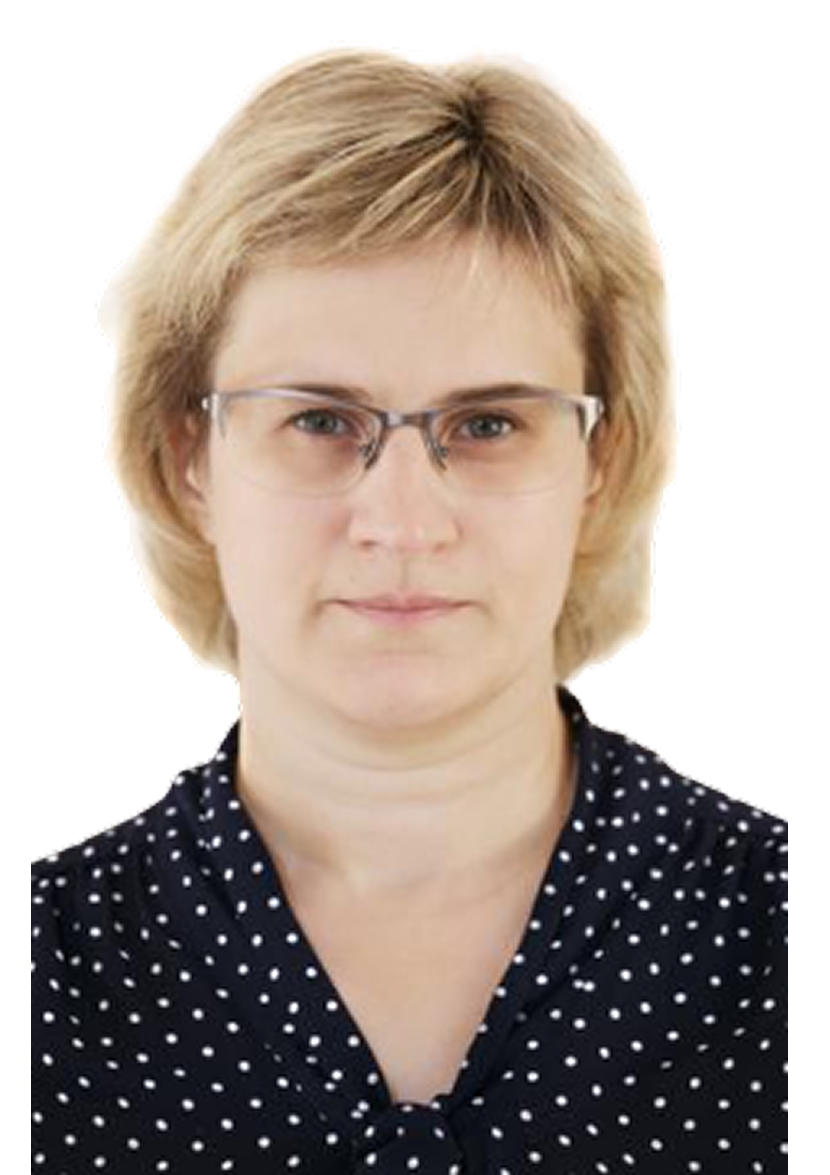
Anastasia Nikulenko
Chair
Director, Center for Foreign Language Studies, ITMO University

Artem Sigaev
Co-chair
Lecturer, Center for Foreign Language Studies, ITMO University

Alexandra Gorkovskaya
Contact person
Laboratory Assistant, Center for Foreign Language Studies, ITMO University
The section “Energy Efficiency and Energy Supply: Challenges, Trends, and Solutions” will focus on the analysis of current issues and future development prospects in the field of energy efficiency across key systems and technologies. Special attention will be given to improving the efficiency of heat and gas supply systems, enhancing hydrocarbon transportation processes, modernizing life-support and power supply systems, and developing integrated energy supply solutions.
The section will also address advancements in refrigeration engineering and low-temperature technologies, which play a crucial role in industry, logistics, and storage systems. An important part of the discussion will focus on thermal measurement instrumentation and its role in optimizing energy consumption.
The relevance of these topics is driven by the need for rational resource utilization, increased reliability and resilience of energy infrastructure, and the reduction of negative environmental impact. The session will explore modern technological and engineering solutions that contribute to the development of efficient and environmentally sustainable energy systems of the future.

Andrey Nikitin
Candidate of Engineering Sciences, Associate Professor, Energy-Efficient Engineering Systems Center, ITMO University

Vladislav Shein
Candidate of Engineering Sciences, Senior Lecturer, Energy-Efficient Engineering Systems Center, ITMO University

Sergey Muraveynikov
Candidate of Engineering Sciences, Associate Professor, Energy-Efficient Engineering Systems Center, ITMO University
Mathematics and Applied AI
The school-conference “Mathematics and Applied AI” is a space for intensive immersion in both the theory and practice of modern intelligent systems. Today, the development of AI requires not only engineering skills but also a deep mathematical foundation. We are creating an environment where academic rigor meets real-world challenges, and where experienced scientists and early-career researchers can jointly explore how the algorithms shaping the future of technology actually work.
The school-conference format encourages participants to go beyond the traditional passive listening of talks. It is a platform for the active exchange of knowledge, where theoretical concepts—from probability theory to optimization methods—are examined through the lens of their applicability to artificial intelligence. We aim to demonstrate that behind every successful applied solution lies an elegant mathematical idea. For participants, this is an opportunity to experience “living” science in action, ask questions to experts, and receive feedback that can help transform academic work into substantial research projects.
Work in this area is focused on addressing pressing questions: how to make neural networks more predictable, where to achieve computational efficiency, and how to formalize problems that were previously approached intuitively. We welcome openness to new ideas and an interdisciplinary mindset. Here, not only the final result matters, but also the process of seeking truth itself—through collaborative analysis of complex cases and the development of a scientific community capable of speaking the language of mathematics when tackling the most challenging problems in applied AI.

Alexander Trifanov
PhD of Physical and Mathematical Sciences, Associate Professor, Faculty of Information Technologies and Programming

Maria Moskalenko
PhD of Physical and Mathematical Sciences, Lecturer, FTII

Milena Matveeva
Lecturer, Faculty of Information Technologies and Programming

Arina Tabieva
Lecturer, Faculty of Technological Innovations and Informatics
tabieva.arina@itmo.ru

Foresight session of the Student Research Association (SRA)
At the foresight session of the Student Research Association (SRA), we will focus on three key areas: student motivation, mentoring, and the development of SRA. We will discuss methods of increasing student engagement and interest in scientific activities, as well as the best mentoring practices to support their growth. Additionally, we will explore strategic development paths for the SRA with the goal of strengthening and expanding its role in the educational process.
The Student Research Association of ITMO is a voluntary association of students involved in scientific research, innovation, and educational activities within the university.
We believe that the exchange of ideas fosters a broader and deeper understanding of scientific subjects across various disciplines.
Our goal is to assist students in developing the professional skills necessary for a successful scientific career.

Technological exhibition Horizons of Collaboration
On October ITMO University will host an exhibition of projects by young scientists and scientific teams!
During this unique event, students and researchers will demonstrate their latest scientific findings and innovative projects in the form of mock-ups, prototypes, and production copies.
Visitors can learn about the latest trends in science and tech, ask their questions directly to the inventors, discuss projects, and establish contact for future partnerships.
SIGN UPThe event is held within a subsidy from the federal budget to educational higher education institutions for the implementation of events aimed at supporting scientific student communities